Slowblog – no daily news – não tem novidades diárias – slow everythinG


Loops & Lines

Claudio Barone

If I Can Dance


  1. Reading Group
  2. Read more about the Reading Group
Since 2006 If I Can’t Dance has organized reading groups on feminism (2006-2008), masquerade (2008-2010) and affect (2010 – 2012). Taking as point of departure a spirit of exchange and open-ended discussion, the Reading Group aims to facilitate a space for in-depth debate, unexpected links and creative disagreement.
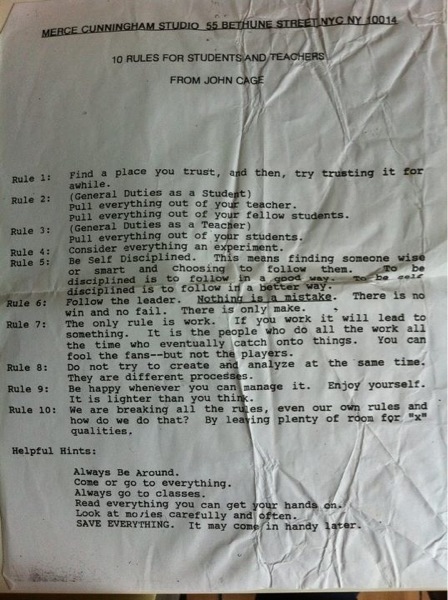
    The Reading Group upholds the following set of rules:
    In the spirit of an open-ended discussion:
    1) There is no audience. We do not need to ‘perform’ this reading group.
    2) You do not need to speak from a fixed position. You are not here as a representative of anything or anyone else.
    3) Say anything… This is all about making the u-turns needed to discover common points of reference.
    From: Annie Fletcher & Sarah Pierce, ‘The Paraeducation Department’, Witte de With /TENT, 2005.
    although a dreamer is everybody in his dream, he can be dreaming the dreams of
    other characters
    ―if you are looking for the bilder deep your ear on the movietone! 62.8
    ―You is feeling like you was lost in this bush, boy? You says: It is
    puling sample jungle of woods. You most shouts out: Bethicket me for a
    stump of a beech if I have the poultriest notions what the farest he all
    means. Gee up, girly!‖ (112.3-6)
    ―look at this pre-pronominal funferal, engraved and
    retouched and edgewiped and puddenpadded, very like a whale‘s egg
    farced with pemmican, as were it sentenced to be nuzzled over a full
    trillion times for ever and a night till his noddle sink or swim by that
    ideal reader suffering from an ideal insomnia‖(120.9-14).

    notes

    Standard Average European (SAE) is a concept introduced by Benjamin Whorf to group the modern Indo-European languages of Europe. Whorf argued that these languages were characterized by a number of grammatical similarities, which made them different from many of the world's other languages. His point was to argue that the disproportionate degree of knowledge of SAE languages biased linguists towards considering grammatical forms to be highly natural or even universal, when in fact they were peculiar to the SAE language group.
    In Whorf's most famous example he contrasted what he called the SAE tense system which contrasts past, present and future tenses with that of Hopi, which Whorf analyzed as being based on a distinction not of tense, but on distinguishing things that have in fact occurred (arealis mood encompassing SAE past and present) as opposed to things that have as yet not occurred, but which may or may not occur in the future (irrealis mood). The accuracy of Whorf's analysis of Hopi tense has later been a point of controversy in linguistics.
    Whorf likely considered Romance and West Germanic to form the core of the SAE, i.e. the literary languages of Europe which have seen substantial cultural influence from Latin during the medieval period. The North Germanic and Balto-Slavic languages tend to be more peripheral members.
    Alexander Gode, who was instrumental in the development of Interlingua, characterized this language as "Standard Average European".[1]The Romance, Germanic, and Slavic control languages of Interlingua are reflective of the language groups most often included in the SAESprachbund

    tks wikipedia