shadowed by the future
à sombra do futuro [shadowed by the future] is an exhibition of international contemporary art that resulted from a study on the prominence of orientation towards the future.
This website contains information about the exhibition, images and texts about the works on display, and also brings images of other related works, videos and texts of references, serving as source of documentation and research.
In "Pierre Menard, Author of the Quixote" (1939), Jorge Luis Borges tells the fictional and unbelievable story of the title character who, by rewriting line by line, word for word, the famous book of Cervantes, wrote a version "almost infinitely more rich" than the old one. The operation undertaken by Menard takes place not by the creation of a proper object, but by symbolically rectifying something already existed previously. On the one hand, judges the object and its history, while on the other, gives it significance, current and future, different from the original. Under the pen of Menard, or rather, Borges, Cervantes' The Quixote — the Knight of the Woeful Countenance who, after reading romances of chivalry, decides to go around the world following fantasies that do not match to reality — transfigures without leaving traces. Tells us an invisible story in which object and meaning juxtapose, in a way that the first becomes, somehow, only the material correlate of the speculative process that has set up the second.
Cover of the magazine The Economist november 2009
It is from the critical reconfiguration proposed by Borges, the notions of value and history subjacent to his narrative, that this exhibition aims to provide a reflection on how speculation, projects and expectations act influentially on both the future and the present and past in the economic, political, social and artistic/cultural fields.
The different artistic proposals of this exhibition articulate, each one in its way, various aspects of these issues. On the whole, delineating a complex scene in which are figured and analyzed procedures of symbolic and value rectification, project formulation, construction of identity, economic and conceptual speculation, formal appropriation and re-articulation, among others. Moreover, without losing sight of the context experienced by Brazil nowadays — considering, for example, its insertion and growth in the global political and economic scenario, the discovery and exploitation of the Pre-Salt and assignment to host the Olympic Games (2016) and the World Cup (2014) — the exhibition presents various documents, offering to the public a more understandable reference to the critical content, sometimes only tacit, of the works. Magazines, posters, newspapers and works establish, thus, a constant dialogue between themselves, outlining a poetic vision and critical overview of the current historical-political-social panorama.
Waiting for Godot - nothing to be done - rien que faire - nichts zu tun
ESG (Emerald, Sapphire and Gold) are a band from the South Bronx, New York, U.S.. The band originally consisted of the Scroggins sisters Maria (congas, vocals), Renee (vocals), and Valerie (drums), and friends David Miles (guitar) and Leroy Glover (bass). A later incarnation of the band consisted of Deborah, Maria (congas, vocals), Renee (guitar, vocals), and Valerie Scroggins (drums). ESG have been influential across a wide range of musical genres, including hip hop, post punk, disco, and dance-punk.
ESG's music is centered around complex polyrhythms, a funky bass and pop-flavored guitar. During their first incarnation, the group signed with 99 Records and issued a debut self-titled EP in 1981 that featured three live (recorded at Hurrah)[1] and three studio songs, the latter produced by English post-punk producer Martin Hannett[2] (Joy Division, etc.). 1982's ESG Says Dance to the Beat of the Moody EP continued in a similar vein, as did their first full-length album, 1983's Come Away with ESG. ESG disbanded shortly thereafter, but re-formed in the early '90s, heralding their comeback with a self-titled 1991 compilation of previously released material. The group's work had become popular among hip-hop artists searching for samples, with such acts as TLC, the Wu-Tang Clan, the Beastie Boys, Big Daddy Kane, Gang Starr, Tricky, Jay-Dee (J-Dilla) on his Donuts album, and indie rockers like Unrest and Liars. The group addressed this issue on the 1992 12" EP Sample Credits Don't Pay Our Bills. The album, ESG Live!, was released in 1995 and featured both old and new material.
The band played their final show on Friday, September 21, 2007 at Chicago's Abbey Pub, during the Estrojam festival.[3]
The band announced that they reformed and will be playing their first returning show at NYC's Santos House Party on September 13. They also claim that both more shows and new music will emerge in the future.[4]
copypasted from wikipedia. many thanks to wikipediateam
veja tb nova receita no mariskinekitchen.blogspot.com/
copypasted from wikipedia. many thanks to wikipediateam
veja tb nova receita no mariskinekitchen.blogspot.com/
primary-saroyan-coffee
“In the late Sixties, when I called myself a poet, Aram was the poet I envied. Because you couldn’t be sure if he was fooling or if he had really gotten to all there is to get. Because while the rest of us tried to be verbs, like everybody told us to do, he had the nerve to stop at nouns. Because he took a deep breath and willed himself into the self-confidence of naming. Because it wasn’t ‘nouns,’ it was ‘noun,’ only one noun, because he boiled it all down to one. Because then he let himself go, he let himself stutter, he let the one go and let the one double and go out of focus: while the rest of us ran for our lives all over the place and over the page, his noun shimmered and breathed and trembled and moved-shh! softly, softly-from within.”
—Vito Acconci
Full sugar crash mode - part II
![[foto_4foto+modernity+in+cetral+europe.jpg]](https://blogger.googleusercontent.com/img/b/R29vZ2xl/AVvXsEi3hwjgJJrgsbwdngmkVWQeA4PdMmEH23Qzyfw9xcy_-kJ20Rrx7sy1Sst-23COrm5U07z7th2jvxdPyvSst1EosTyBJmbfyyq5_RtGQc1sur2UOwMzjh-Nc7wZei3fAMWhE9RRiuYh2-uW/s1600/foto_4foto+modernity+in+cetral+europe.jpg)
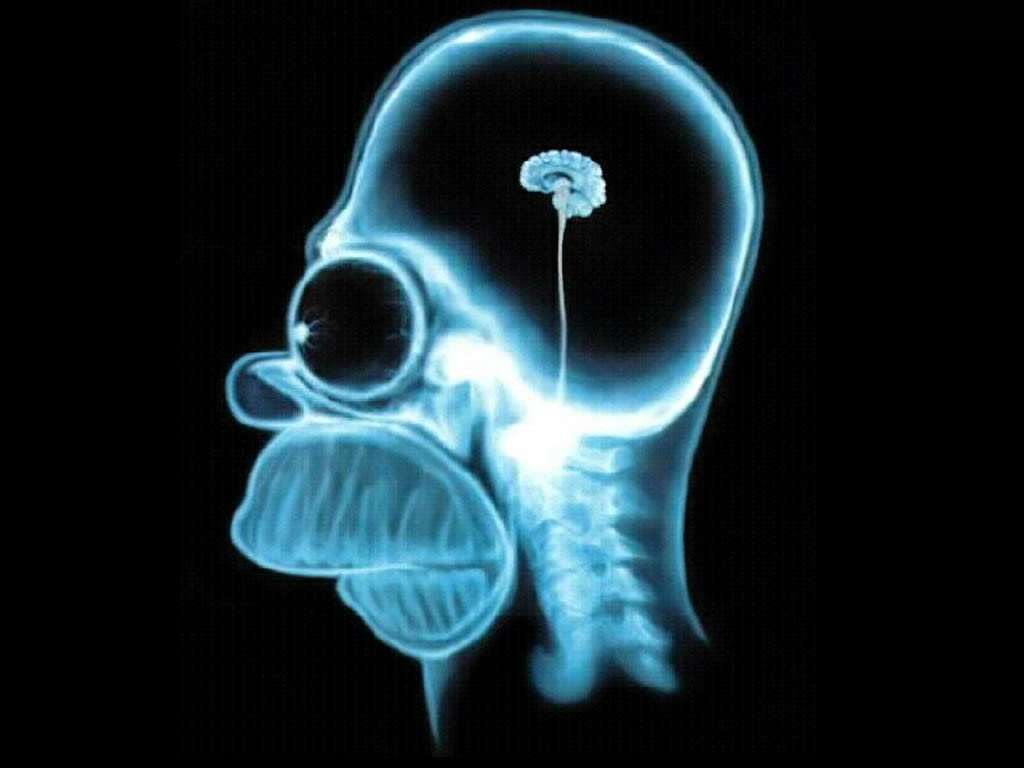
Atelier Manassé (Olga Spolarics [Austrian, b. Hungary, 1895–1969] and Adorján Wlassics [Austrian, b. Hungary, 1893-1947])
My Little Bird (Mein Vögerl), 1926
Gelatin-silver print, 21.5 x 16.8 cm
Dietmar Siegert Collection
My Little Bird (Mein Vögerl), 1926
Gelatin-silver print, 21.5 x 16.8 cm
Dietmar Siegert Collection
Delete

“The human brain contains roughly 100 terabytes of information, not much when you get right down to it. The question isn’t how to store it it’s how to access it. You can’t download a personality, there’s no way to translate the data. But the information being held in our heads IS available in other databases. People leave more then foot prints as they travel through life; medical scans, DNA profiles, psych evaluations,
Assinar:
Postagens (Atom)